Home Banner

We study how physics can change what computers can do and what computation costs. We pioneered probabilistic bits, or p-bits, whose states fluctuate with controllable probabilities. By coupling p-bits, we turn physical randomness into a resource for computation.

We use statistical physics to rethink learning and generation in AI, and develop algorithms and hardware to reduce the energy and memory traffic they require. Our work spans algorithms running on today's computers and the design of future probabilistic machines. Building devices and programmable systems lets us test whether computational advantages survive the costs of communication and scaling.

We also investigate the capabilities and limits of probabilistic computers and their relationship with quantum computers. We study how far classical probabilistic methods can go in optimization and quantum simulation, and where quantum interference makes classical sampling difficult. We combine theoretical analysis with hardware and system benchmarks to identify where advantages arise and what resources they require.

 Join OPUS Lab!

We are recruiting!

 Research Areas

We develop probabilistic algorithms and computing systems for AI inference, optimization, and quantum simulation.
We design and measure stochastic devices and integrated circuits for programmable probabilistic computation.
We study the capabilities and limits of probabilistic computers and their relationship with quantum computers.

 Recent News

July 31, 2025

We are thrilled to welcome Kriteen Shrestha as a graduate student to OPUS!

July 10, 2025

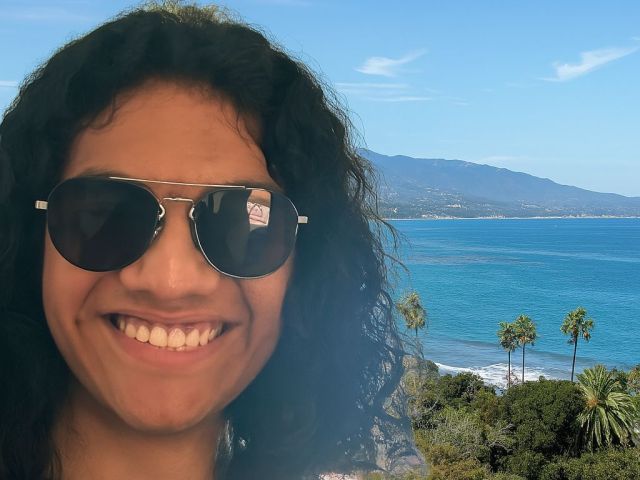
We are excited to have Jared (Class of '28 UC Santa Barbara) join OPUS Lab!

April 28, 2025

Shaila Niazi and Navid Anjum Aadit secure UCSB-wide Graduate Fellowships

April 8, 2025

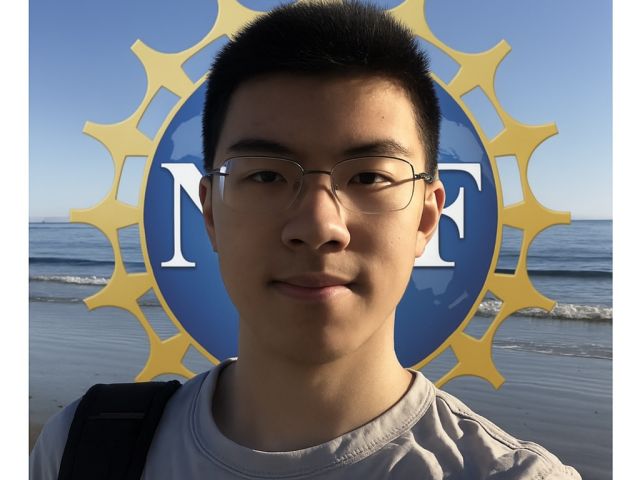
We’re thrilled to share that Kyle has been awarded the highly competitive National Science Foundation Graduate Research Fellowship (NSF GRFP).

March 21, 2025

We are excited to welcome Kyle to OPUS.

March 7, 2025

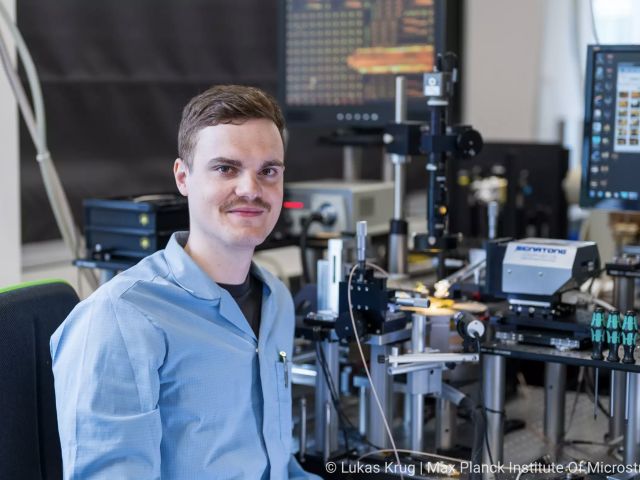
We are thrilled to host Simon as a visiting researcher supported by a DAAD Fellowship to visit UC Santa Barbara's OPUS Lab.

January 27, 2025

OPUS Lab is recognized for its work on Stochastic Neuromorphic Computing with Probabilistic Bits 

January 23, 2025

Kyle's work on chaotic Ising Machines is now published in Communications Physics

October 21, 2024

Nihal's paper on Gaussian p-bits is to appear in IEDM 2024! 

October 18, 2024

Our benchmarking of p-bits against leading Ising Machines has now been published in Nature Communications.